


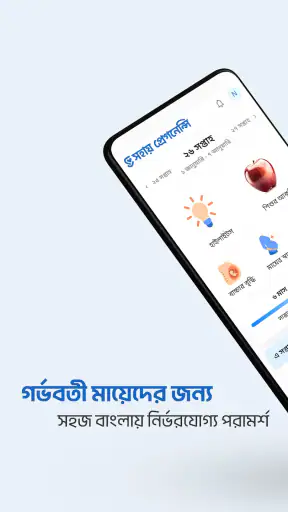

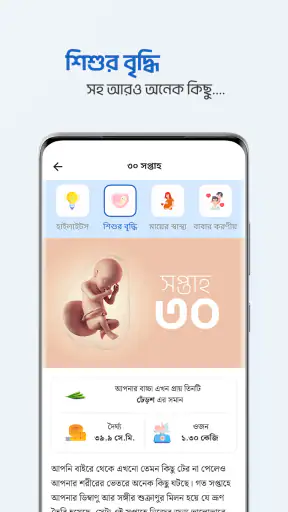
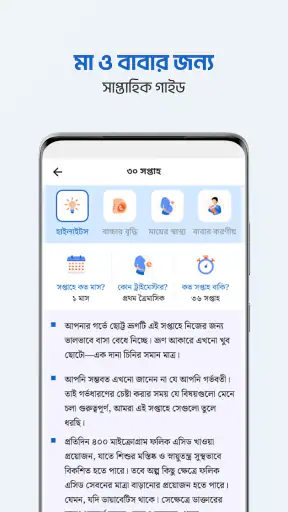
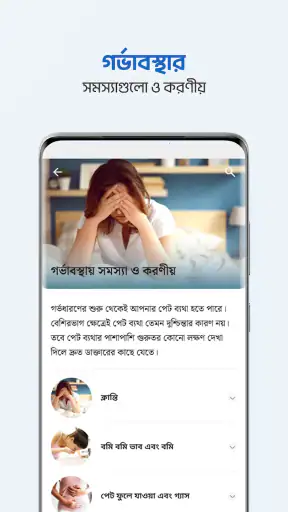
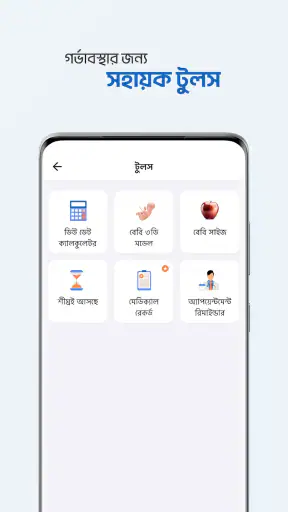
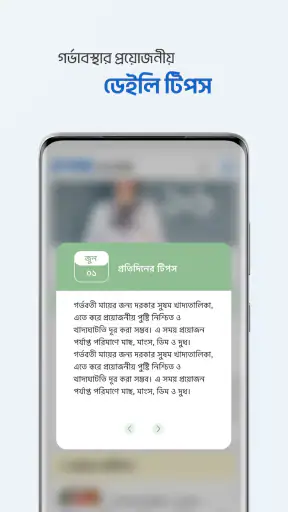
Pregnancy advice is easiest to use when it fits into ordinary life: a quick check during breakfast, a calm explanation after an appointment, or a reminder when a new question appears late at night. That is the space Shohay Pregnancy tries to fill. Developed by Shohay Health, this free parenting app is designed as an evidence-based pregnancy companion in Bangla, which immediately gives it a practical advantage for Bangla-speaking families who may find English medical apps tiring or difficult to follow.
I see it as a supportive information tool rather than a replacement for a doctor, midwife, or hospital. That distinction matters. Pregnancy can involve personal medical history, changing symptoms, and situations that cannot be judged safely by an app alone. Used with that boundary in mind, the app can make reliable explanations easier to reach and easier to discuss with family members or healthcare professionals.
Its broad audience is reflected in an Everyone content rating, while its reach is already substantial, with more than one million installs and an average score of 4.5 from roughly 3.3 thousand ratings. Those figures suggest that it has found a real audience, but they do not tell me whether it will suit every pregnancy. My own view is more specific: it is most useful for people who want pregnancy information in Bangla and prefer a focused companion instead of a crowded collection of unrelated health tools.
How the current version fits into pregnancy planning and daily questions
The current release is version 2.0.2, and the app was released on June 24, 2023. I would not treat the version number as proof that every part of the experience is perfect, but it does give the app a defined current state rather than making it feel like an abandoned experiment. On Android, it supports devices running version 8.0 or later, so many older phones can still be suitable if they meet that requirement.
The most important choice is the language. A pregnancy guide can be medically sound and still be difficult to use if its wording feels distant or overly technical. Bangla makes the information more approachable for users who think, ask questions, and explain family concerns in Bangla. It can also make conversations between a pregnant person and relatives more natural, especially in households where different generations rely on different languages for health information.
I would begin by treating the app as a reading and preparation companion. Instead of opening it only when something feels alarming, I would use it to build a small routine: read a relevant topic, note down anything unclear, and take those questions to the next clinical visit. This workflow is more valuable than passively scrolling because it turns general information into a practical checklist for a real conversation.
One useful habit is to separate information into three groups while reading: things that are generally expected, things worth mentioning at the next appointment, and things that require prompt professional attention. The app can help with the first two groups, but the third should never depend on an app screen alone. If a symptom feels severe, sudden, or worrying, contacting an appropriate healthcare service is the safer decision.
A realistic everyday use case
Imagine someone in the middle of a busy week who hears a new pregnancy term during a clinic visit but does not fully understand it. At home, she opens Shohay Pregnancy in Bangla, reads the related explanation, and writes down two follow-up questions for her next appointment. Her partner can read the same material instead of relying on a hurried translation, and the family discussion becomes more precise.
That scenario shows where this app can be stronger than a general web search. Search results often mix medical sources, personal stories, advertisements, and frightening outliers. A focused pregnancy app gives the user a more controlled starting point. It does not remove the need to judge sources, but it can reduce the noise that makes a simple question feel overwhelming.
There is also a less obvious benefit for family support. When information is available in the language used at home, a partner or relative can participate without making the pregnant person act as an interpreter. That can improve shared understanding of routine care and reduce the chance that a family member bases advice on an old belief or an isolated social-media post.
What the evidence-based approach means in practice
The phrase “evidence-based” raises the right expectation: explanations should be grounded in established health knowledge rather than rumors or dramatic anecdotes. I appreciate that positioning, particularly in pregnancy, where online discussions can quickly turn one person’s experience into advice for everyone. Still, I would read the app as general education, not as a personalized medical assessment.
The trade-off is important. A general explanation may be reassuring for one person and incomplete for another because medical history changes the meaning of symptoms, medicines, tests, and recommendations. I would therefore avoid using any article or guidance as permission to start, stop, or change treatment. The app is better used to improve questions and understanding than to make clinical decisions independently.
For a first-time parent, the app may provide a calmer starting point than searching the open web. For someone already receiving detailed care from a specialist, its value may be narrower: it can translate concepts into accessible Bangla, help a partner follow along, or provide background before an appointment. That makes it complementary rather than universally necessary.
What has changed, who benefits, and where the limits remain
Reading the current release without overpromising
Version 2.0.2 is the release I would judge as the present experience. The known release date gives some context, but I would avoid assuming that a newer version number automatically means a complete redesign or a major clinical upgrade. What matters more is whether the information remains understandable, relevant, and easy to use during the changing stages of pregnancy.
For existing users, an update such as this is best approached practically. Open the app after updating, check that your usual reading routine still feels comfortable, and revisit any saved notes or personal references you rely on. I would also keep important appointment details and medical instructions somewhere separate, because an app should not be the only place where essential health information is stored.
The app’s free price lowers the barrier to trying it. That is especially helpful for families who do not want another paid subscription while preparing for a baby. Free access also makes it easier for a partner or trusted relative to explore the same educational material. The limitation is that free does not automatically mean complete, deeply personalized, or suitable for every clinical question; users still need to judge when professional care is more appropriate.
How it compares with common alternatives
The usual alternative is a broad pregnancy tracker that focuses on calendars, week-by-week development, reminders, or lifestyle logging. Those tools can be useful when someone wants to record personal details or follow a timeline. Shohay Pregnancy has a different appeal: its strongest reason to choose it is the combination of pregnancy education and Bangla accessibility, not the promise of replacing every other pregnancy utility.
Another alternative is general web searching. That route offers enormous breadth, but it also demands more source-checking and can expose users to contradictory or alarming material. A focused app is easier to return to when the question is clearly pregnancy-related. I would choose the app for a calmer first read, then use a clinician or trusted medical source when the answer could affect treatment or urgent care.
There is also the option of relying only on clinic handouts or conversations with healthcare professionals. Those remain essential, particularly for personal recommendations. The app can fill the gaps between appointments, but it cannot examine a patient, interpret a complete medical record, or respond to an emergency. If someone already has excellent Bangla support from a care team, the app may be useful but not essential.
Small workflows that make it more useful
My first practical tip is to read with a question notebook, whether that is paper or a separate notes app. Write the exact phrase that caused confusion, then add what you want to ask a professional. This prevents a general article from becoming a substitute for care and makes appointments more efficient.
My second tip is to share only the relevant explanation with family members rather than forwarding every health-related message. A focused conversation is less likely to create unnecessary worry. If relatives prefer Bangla, the app can act as a common reference point, but I would still discourage anyone from turning a general passage into a rigid rule for the pregnant person.
My third tip is to use it at a predictable time instead of repeatedly checking for reassurance. Constant symptom searching can increase anxiety, especially when ordinary changes are interpreted through worst-case examples found elsewhere. A short, planned reading session followed by a note for the next appointment is a healthier workflow than endless scrolling.
A fourth trade-off is worth noting for users with limited phone storage or older hardware. The minimum requirement of Android 8.0 is not especially demanding, but compatibility alone does not guarantee that every older device will feel equally smooth. I would keep the phone’s software reasonably current and remove unnecessary clutter if reading feels slow. That is basic maintenance, but it can make a health app less frustrating to use.
Who should choose it, and who should look elsewhere
I would recommend trying Shohay Pregnancy to a Bangla-speaking expectant parent who wants accessible educational material, a partner who wants to understand pregnancy discussions better, or a family member who needs a clearer alternative to informal advice. It is particularly appealing when language is the main obstacle to understanding otherwise useful health information.
I would be more cautious about recommending it as the only pregnancy resource. Anyone with a high-risk pregnancy, a complex medical condition, medication questions, or worrying symptoms should prioritize direct clinical guidance. The app may still help prepare questions, but it should not become the decision-maker.
I would also suggest a different type of app to someone whose main need is detailed personal tracking, appointment management, nutrition logging, or a highly customized pregnancy calendar. An educational Bangla companion may not satisfy those goals by itself. Choosing it for the wrong reason could lead to disappointment, even though it remains valuable for language-accessible learning.
What I would watch as the product develops
Because pregnancy guidance can change as medical recommendations evolve, I would pay attention to how consistently the developer, Shohay Health, keeps explanations current and understandable. Clear wording matters as much as adding more content. New material would be most useful when it answers common real-life questions without encouraging self-diagnosis or unnecessary fear.
I would also look for continued attention to the experience of partners and families, not only the person carrying the pregnancy. Bangla accessibility is already the app’s clearest identity, so maintaining natural, readable language should remain more important than adding distracting extras. A smaller, carefully explained library can be more useful than a larger one that feels difficult to navigate.
For a new user, my suggested approach is simple: install the free app on a compatible Android phone, explore it when calm, and decide whether the Bangla explanations fit your needs. Keep your healthcare provider’s instructions at the center, use the app to prepare better questions, and stop relying on general reading when a symptom feels urgent. That balance is where the product makes the most sense.
Overall, I find Shohay Pregnancy most convincing as a language-first pregnancy education tool. Its free access, Everyone rating, Bangla focus, and evidence-based positioning make it approachable for a wide range of families, while its limits are the normal but important limits of general health information. I would recommend it to someone who wants clearer Bangla guidance between appointments, but I would not present it as a replacement for personalized care. Used thoughtfully, it can turn confusing pregnancy questions into better conversations, which is a genuinely useful role.


